

Multistory Building
Minghua Steel Structure is a subsidiary of Cangzhou Junxing Minghua Steel Structure Co, Ltd, a professional company specializing in steel structure design, development, fabrication, processing, and installation of all kinds of steel structure projects. The company is located in Hebei Province, China, and covers an area of 28,000 square meters. Our new second factory, covering an area of 30,000 square meters, is under construction.


Our Advantages
Rich Production Experience
Our company is a professional steel structure manufacturer 17 years of production experience. Our annual output exceeds 50,000 tons, and our products are exported to more than 30 countries and regions.
Strong R&D Capabilities
Our company has professional design personnel, including several experienced structural engineers. We will design customized solutions for users based on customer requirements, usage, and local climate.
Technology First
Our company has advanced steel structure production equipment and technology, including a complete standardized product line, automatic submerged arc welding machines, bridge erecting machines, large intelligent bending machines, sandwich panel machines, and other large precision equipment to ensure the advancement of products.
Reliable Product Quality
After years of development and construction, our company has obtained certifications from the Ministry of Housing and Urban-Rural Development of the People's Republic of China, ACC, IAF, UKAS, BV, and other governments and organizations. ISO9001, ISO45001, ISO14001, and other certifications represent our strength.
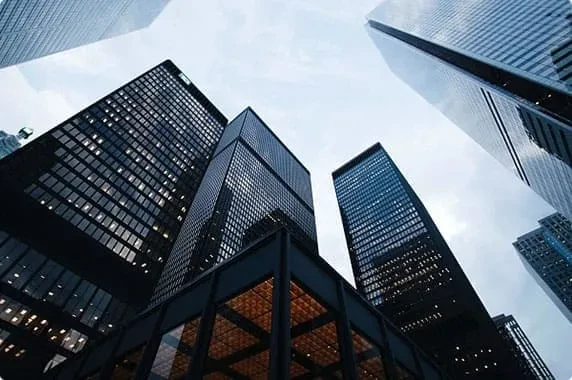
Multi-storey buildings have proven to be the optimal choice for commercial construction due to their speedy assembly. This is made possible by utilising a high degree of prefabricated materials, rigid design precision, thorough quality control measures, and a risk-averse approach to construction, resulting in a faster completion rate compared to traditional building methods.

Common Types of Steel Structures
1.Steel Frame Structures
These are the most common type of steel structures and are used in a wide range of buildings, from high-rise offices to residential homes. The steel frame structure consists of vertical steel columns, horizontal steel beams, and steel connections that hold the members together. The beams and columns are connected by welding or bolting, creating a rigid and stable structure.
Advantages:
- They are quick to assemble, reducing construction time and labor costs.
- They are also lightweight and require less foundation work than concrete structures.
- Additionally, steel is a sustainable and recyclable material, making it an environmentally-friendly option for construction.
2.Steel Truss Structures
Steel truss structures are a type of construction method that uses a series of interconnected triangles to distribute weight evenly across the structure. Steel truss structures are commonly used for roofs and bridges, but can also be used for other applications where long spans are required.
Advantages:
- They are lightweight and require less material than other types of structures, making them more cost-effective.
- They are also quick to assemble, reducing construction time and labor costs.
- Steel truss structures are also very durable and can withstand harsh environmental conditions, such as high winds and earthquakes.
3.Steel Space Frame Structures
Steel space frame structures are a type of construction method that uses a three-dimensional framework of steel tubes to support the weight of the structure. Steel space frame structures are commonly used for large buildings such as airports and sports arenas. The steel space frame structure consists of a series of steel tubes that are welded together to create a three-dimensional framework. The framework is then covered with roofing and cladding materials to create the final structure.
Advantages:
- They can span long distances without the need for intermediate supports, making them ideal for large buildings and other structures that require a wide open space.
- They are also lightweight and require less material than other types of structures, making them more cost-effective.
- They are also very durable and can withstand harsh environmental conditions, such as high winds and earthquakes.
- They are also easy to maintain, as the framework is easily accessible for inspection and repair.
4.Light Gauge Steel Structures
Light gauge steel structures use lightweight steel frames to support the weight of the structure and are commonly used for residential and small commercial buildings. The light gauge steel structure consists of steel frames made of thin sheet steel that are cold-formed into C-shaped or Z-shaped sections. The sections are then assembled into a frame using screws or bolts.
Advantages:
- They are quick to assemble, reducing construction time and labor costs.
- They are also lightweight and require less foundation work than concrete structures.
- Additionally, light gauge steel is a sustainable and recyclable material, making it an environmentally-friendly option for construction
- They are also easy to maintain and repair, as damaged sections can be easily replaced.
5.Pre-Engineered Steel Structures
Pre-engineered steel structures are a type of construction method that uses standardized components that are prefabricated off-site and assembled on-site. Pre-engineered steel structures are commonly used for industrial buildings such as factories, warehouses, and distribution centers. The pre-engineered steel structure consists of standardized components such as steel columns, beams, purlins, and girts that are designed to fit together easily.
Advantages:
- They are quick to assemble, reducing construction time and labor costs.
- The standardized components also make them more cost-effective than custom-built structures.
- They can be designed to meet specific requirements, such as load-bearing capacity, insulation, and environmental factors.
- Pre-engineered steel structures are also very durable and can withstand harsh environmental conditions, such as high winds, earthquakes, and fire.
- They are also easy to maintain, as damaged components can be easily replaced.
Maximises Land Use
One of the most significant benefits of multi-storey buildings is that they allow for the maximum utilisation of limited land. By building upwards instead of outwards, these structures allow developers to create more space on a smaller footprint. This is especially important in densely populated cities where every square metre of land is valuable.
Increases Density and Reduces Urban Sprawl
Multi-storey buildings also contribute to reducing urban sprawl. By building upwards, cities can increase density and create more compact and sustainable communities. This, in turn, reduces the amount of land needed for development, preserving green spaces and reducing the carbon footprint of the city.
Enhances Community Life
Multi-storey buildings can also enhance community life by providing a variety of housing options, from apartments to townhouses. This creates a mix of people from different backgrounds and income levels, promoting diversity and a sense of community.
Provides Amenities
Many multi-storey buildings also include amenities such as shopping centres, recreational facilities, and offices. This makes them an ideal choice for those who want to live and work in the same area. The integration of these amenities into the building also reduces the need for car use and promotes sustainability.
Saves Energy
Multi-storey buildings are also more energy-efficient than single-story structures. Because they have smaller roof areas, they require less energy to heat and cool.
Designing Freedom
Multi-storey buildings boast a hallmark feature of design freedom, allowing for a level of creativity beyond that of traditional constructions due to their unique geometric capabilities.

Structural Steel Beams
Steel beams form the basis of many different types of structures. They typically feature a central section called the web with two tapering flanges at each end, forming an “I” shape. However, there are many different types of steel beams including H-beams, which have non-tapering edges and are stronger and heavier than I-beams, and T-beams, whose single flange makes them ideal for reinforcing structures.
Structural Steel Channels
Similar to beams but with flanges that extend from only one side of the web, structural steel channels have a flat surface on the side opposite the flanges. C-channels, U-channels, and similar components are typically used for bracing and support rather than load-bearing applications, with the flat side being bolted to flat surfaces of the main structure.
Bearing Piles
Structural steel bearing piles have a similar shape to beams, but with a uniform thickness across the web and flanges. The primary application of bearing piles is to support vertical loads. To do so, they are often driven deep into the ground to provide a stable foundation for the structure.
Structural Steel Angles
As the name suggests, steel angles have an angular shape that makes them a versatile component for constructing towers, bridges, and other structures. The most basic steel angle is the L-shape, which consists of two lengths of steel forming a 90-degree angle, but steel angles can be much more complex. Hollow structural sections (HSS), for example, have multiple angles to form square or rectangular shapes, which allow multi-dimensional load-bearing support.
Structural Steel Plate
Steel plate, a material akin to sheet metal but thicker, has countless applications. It can be used in ship hulls, storage tanks, and foundations for bridges and buildings.
Maintenance Tips for Multistory Building
Make Sure All the Components are Accounted for
The maintenance of pre-engineered steel buildings starts from the moment the components are fabricated and delivered to your site. While choosing a quality metal fabricator is a given, many project owners make the mistake of not accounting for all the pieces delivered on-site. While pre-engineered steel buildings are easier to assemble in general, it would be best to cross-check all the components delivered. No matter how small, a missing component can compromise the overall stability and durability of your building.
Check the Insulation
Pre-engineered steel buildings require insulation to decrease heating and cooling costs, and maintain a comfortable temperature. Damaged insulation can also result in moisture buildup, which in turn, decreases the building's effectiveness with parts succumbing to corrosion, foundations shifting, and metal panels bending. Inspect your building's insulation regularly to ensure it hasn’t been compromised in any way.
Schedule Bi-Annual Maintenance Checks
Scheduling preventive maintenance regularly can help you stay on top of any changes taking place in your pre-engineered steel building. With this, you can identify problems before they take place and minimize costs. You can perform a maintenance check twice a year or after any renovation or extreme weather conditions occur. Record any problems and address them. If necessary, notify your metal fabrication company of any potential defects.
Take Care of the Fasteners
Pre-engineered steel buildings have modular designs. They are split into different components and attached with fasteners such as nuts, rivets, anchor bolts, and screws. Damaged fasteners can compromise the structural integrity of your building. Fasteners that are loose should be tightened and ones that are damaged should be replaced immediately because it can affect the load distribution of the entire structure. Damaged fasteners can compromise the structural integrity of your building and lead to collapses.
Wash the Building Annually
One of the main benefits of having a pre-engineered steel building is that they do not require the same level of maintenance as in conventional buildings. Nonetheless, when they start to show indications of dirt, the structure will greatly benefit from washing. Cleaning the building also helps it retain its aesthetic appeal for an extended period of time. Wash your building annually to prevent dirt and grime accumulation. To do this, simply use a low-pressure power washer and a suitable cleansing solution such as an ammonia mix. For stubborn stains and removing mildew or fungus, you can opt to use a cup of bleach.
Repaint the Building with the Right Coating
While it's true that these pre-engineered steel buildings are highly durable, there may be instances wherein heavy equipment, forklifts, or cranes can cause dents and scratches on the structure. These areas can be where corrosion originates and spreads further to compromise the building's foundations. It is always a good idea to repaint the building and keep it protected. Keep in mind that the exterior of a pre-engineered steel building can be coated to be resistant to certain environmental forces. For example, the building can be made with metal components with galvanized finishing to combat corrosion.
Ultimate FAQ Guide to Multistory Building
We're well-known as one of the leading multistory building manufacturers and suppliers in China. If you're going to buy high quality multistory building, welcome to get more information from our factory. Also, customized service is available.
Steel Structure Office Building, Steel Structure Commercial Building, Galvanized Steel Floor Decking Sheet