

Hey there, folks! As a supplier of Metal Sandwich Panels, I often get asked about the acoustic performance of these nifty products. So, I thought I'd take some time to break it down for you in this blog post.
First off, let's talk about what metal sandwich panels are. They're basically composite materials made up of two metal skins with a core material in between. The core can be made of various substances like polyurethane, rock wool, or other materials, each with its own set of properties.
Now, when it comes to acoustic performance, it's all about how well these panels can reduce sound transmission. There are a few factors that play a role in determining how good a metal sandwich panel is at blocking out noise.
One of the key factors is the core material. For example, a Polyurethane Sandwich Panel has some unique acoustic properties. Polyurethane is a lightweight and flexible material. It can absorb sound waves to a certain extent. When sound hits the panel, the polyurethane core starts to vibrate, and this vibration helps to convert the sound energy into heat energy. This process is known as sound absorption. The more sound energy that gets converted into heat, the less sound is transmitted through the panel.
On the other hand, Rock Wool Sandwich Panel is another popular option for acoustic applications. Rock wool is made from natural rock fibers, and it has excellent sound - insulating capabilities. The fibrous structure of rock wool creates a maze - like path for sound waves. As the sound waves travel through the rock wool, they bounce around between the fibers, losing energy along the way. This makes it much harder for the sound to pass through the panel, resulting in better sound insulation.
Another important aspect is the thickness of the panel. Generally speaking, thicker panels tend to have better acoustic performance. A thicker core provides more material for the sound waves to interact with, increasing the chances of sound absorption and insulation. For instance, if you're looking to block out really loud noises, like those from industrial machinery or busy roads, a thicker metal sandwich panel would be a better choice.

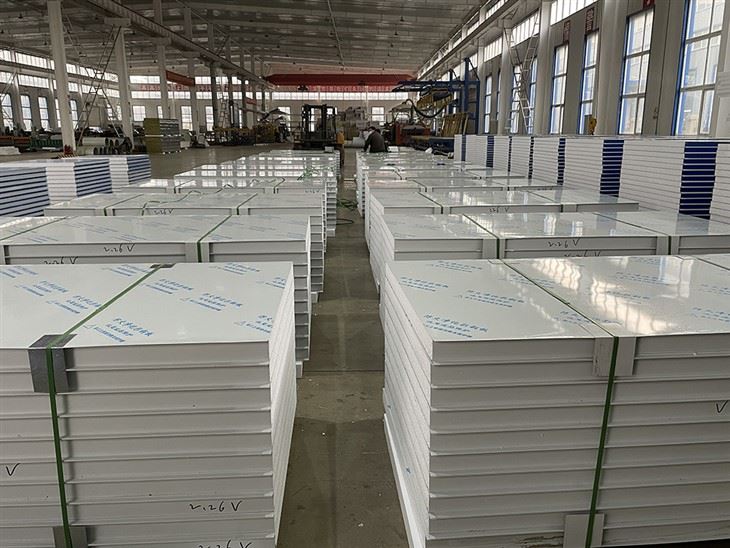
The density of the core material also matters. A higher - density core can usually offer better sound insulation. This is because a denser material has more mass, and it takes more energy for sound waves to pass through it. However, it's a bit of a balancing act because increasing the density too much can also make the panel heavier and more expensive.
Now, let's talk about the metal skins. They also contribute to the acoustic performance of the panel. The type of metal used and its thickness can affect how well the panel reflects and absorbs sound. For example, a thicker metal skin can provide better sound reflection, which means that more of the sound waves bounce off the panel instead of passing through it.
In real - world applications, metal sandwich panels are used in a wide range of places where acoustic performance is crucial. In commercial buildings, they can be used in offices to create a quieter working environment. By installing metal sandwich panels on the walls and ceilings, you can reduce the amount of noise that travels between different rooms, making it easier for people to focus on their work.
In the industrial sector, these panels are used in factories and warehouses. Industrial machinery can be extremely noisy, and using metal sandwich panels can help to contain the noise within the building. This not only makes the working conditions more comfortable for the employees but also reduces the noise pollution in the surrounding area.
In residential buildings, metal sandwich panels can be used for exterior walls and partitions. They can help to block out the noise from traffic, neighbors, and other external sources, creating a more peaceful living environment.
If you're considering using Metal Extruded Sandwich Panel, it's important to note that they also have their own acoustic characteristics. The extrusion process can give the panel a more uniform structure, which can sometimes lead to better acoustic performance. The metal extrusion can also provide additional strength and durability, which is a plus in many applications.
So, how do you measure the acoustic performance of metal sandwich panels? One of the most common ways is to use the Sound Transmission Class (STC) rating. The STC rating is a single - number value that represents how well a material can block sound. A higher STC rating means better sound insulation. For example, a panel with an STC rating of 50 will block out more sound than a panel with an STC rating of 30.
When you're choosing metal sandwich panels for your project, it's important to look at the STC rating and other acoustic specifications provided by the manufacturer. This will help you to select the right panel that meets your specific acoustic requirements.
In conclusion, the acoustic performance of metal sandwich panels is influenced by several factors, including the core material, thickness, density, and the metal skins. By understanding these factors, you can make an informed decision when choosing the right panel for your project.
If you're interested in learning more about our metal sandwich panels or are thinking about a purchase, we'd love to hear from you. Whether you're a builder, an architect, or a business owner, we can provide you with the best - suited panels for your acoustic needs. Just reach out to us, and we'll start a great conversation about how our products can enhance your project.
References
- Building Acoustics Handbook, Various authors
- Acoustic Materials and Their Applications, Industry research reports