

What are the fire - protection systems available for a portal steel structure hangar?
As a supplier of Portal Steel Structure Hangars, I understand the critical importance of fire - protection systems in these facilities. Portal steel structure hangars are widely used in various industries, especially in aviation for aircraft storage and maintenance. Given the high - value assets stored within and the potential for rapid fire spread, implementing effective fire - protection systems is non - negotiable.
1. Fire - Resistant Coatings
One of the most basic yet essential fire - protection measures for portal steel structure hangars is the application of fire - resistant coatings. Steel, while a strong and durable material, loses its structural integrity at high temperatures. When exposed to fire, steel can quickly heat up, leading to deformation and collapse of the structure.
Fire - resistant coatings act as a barrier between the steel and the heat of a fire. These coatings are designed to insulate the steel, slowing down the rate at which it heats up. There are two main types of fire - resistant coatings: intumescent and non - intumescent.
Intumescent coatings are particularly popular. When exposed to heat, they expand to form a thick, insulating char layer. This char layer can significantly reduce the heat transfer to the underlying steel, allowing the structure to maintain its integrity for a longer period. This extra time can be crucial for evacuating personnel and minimizing damage. For example, in a Steel Structure Aircraft Maintenance Depot, where complex maintenance work is carried out, a fire - resistant coating can buy valuable time for technicians to safely exit the building and for the fire - suppression systems to activate.
Non - intumescent coatings, on the other hand, provide a passive layer of insulation. They are typically made of materials such as cementitious compounds. These coatings are less affected by the heat and provide a stable insulating layer throughout the fire event.
2. Sprinkler Systems
Sprinkler systems are a cornerstone of fire - protection in portal steel structure hangars. They are highly effective in controlling and extinguishing fires in the early stages. There are different types of sprinkler systems available, each with its own advantages.
Wet sprinkler systems are the most common type. In these systems, water is constantly present in the pipes. When a fire occurs and the heat activates the sprinkler heads, water is immediately released. The water cools the fire and the surrounding area, suppressing the flames and preventing the fire from spreading.
Dry sprinkler systems are used in areas where freezing is a concern, such as in unheated hangars in cold climates. In a dry sprinkler system, air or nitrogen is in the pipes instead of water. When the heat from a fire activates the sprinkler heads, the air is released, and water then flows into the pipes.
Pre - action sprinkler systems combine the features of both wet and dry systems. They require two separate events to occur before water is released: the activation of a fire detection system and the melting of the sprinkler head. This extra level of control helps prevent false alarms and accidental water discharge, which can be costly in a hangar environment, especially when dealing with sensitive aircraft equipment.
In a Steel Structure Hangar without Middle Column, a well - designed sprinkler system can ensure comprehensive coverage of the large, open space, providing effective fire protection.
3. Fire Detection Systems
Early detection of fire is key to minimizing damage and ensuring the safety of personnel in a portal steel structure hangar. Fire detection systems can quickly identify the presence of a fire and trigger the appropriate response.
Smoke detectors are one of the most common types of fire detection devices. They work by sensing the presence of smoke particles in the air. There are two main types of smoke detectors: ionization and photoelectric. Ionization detectors are more sensitive to fast - flaming fires, while photoelectric detectors are better at detecting smoldering fires.
Heat detectors are another option. They are designed to activate when the temperature in a specific area reaches a pre - set level. Heat detectors are useful in areas where smoke detectors may be prone to false alarms, such as in areas with high levels of dust or steam.
Flame detectors are highly specialized and are used in areas where rapid fire detection is crucial. They detect the ultraviolet or infrared radiation emitted by flames. Flame detectors can quickly identify a fire, even in large, open spaces like an Airfield Hangar, and trigger the fire - suppression systems.

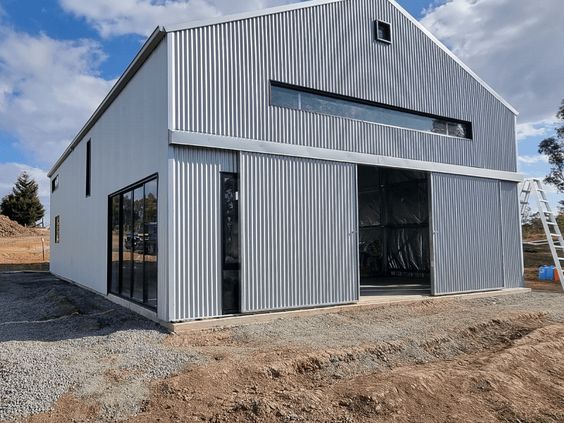
4. Fire Doors and Fire Curtains
Fire doors and fire curtains are essential for compartmentalizing a portal steel structure hangar. In the event of a fire, they prevent the spread of fire and smoke from one area to another.
Fire doors are designed to withstand the heat and flames of a fire for a specified period. They are typically made of fire - resistant materials and are equipped with self - closing mechanisms. When a fire is detected, the fire doors automatically close, creating a barrier that restricts the movement of fire and smoke.
Fire curtains are another effective way to compartmentalize a hangar. They are usually made of fire - resistant fabric and can be quickly deployed in the event of a fire. Fire curtains can be used to divide large open spaces, such as in a hangar with multiple bays, into smaller, fire - resistant compartments.
5. Gas - Based Fire Suppression Systems
In areas where water damage could be extremely costly, such as in areas with sensitive electronic equipment or aircraft interiors, gas - based fire suppression systems are a viable option.
Carbon dioxide (CO₂) systems are one of the most well - known gas - based fire suppression systems. CO₂ works by displacing oxygen, which is necessary for combustion. When a fire is detected, CO₂ is released into the protected area, quickly suppressing the fire. However, CO₂ can be dangerous to humans in high concentrations, so proper safety measures, such as evacuation procedures and warning signs, must be in place.
Clean agent fire suppression systems use gases that are non - toxic and leave no residue. These gases, such as FM - 200 or Novec 1230, are environmentally friendly and are suitable for use in areas where water or CO₂ could cause damage. They work by interrupting the chemical reaction of the fire, quickly extinguishing it.
Conclusion
As a supplier of Portal Steel Structure Hangars, I am committed to providing our customers with the most effective fire - protection solutions. A combination of fire - resistant coatings, sprinkler systems, fire detection systems, fire doors and curtains, and gas - based fire suppression systems can ensure the safety of personnel and the protection of valuable assets in a portal steel structure hangar.
If you are in the market for a portal steel structure hangar or need to upgrade the fire - protection systems in your existing hangar, I encourage you to contact us. We have a team of experts who can assess your specific needs and provide customized solutions. Our goal is to help you create a safe and secure environment for your operations.
References
- National Fire Protection Association (NFPA) standards related to fire protection in industrial buildings.
- "Fire Protection Handbook" by the National Fire Protection Association.
- Research papers on fire - protection technologies for steel structures.