
Hey there! As a supplier of multistory buildings, I've seen firsthand the importance of choosing the right structural system. It's not just about making the building stand up; it's about ensuring safety, durability, and cost - effectiveness. In this blog, I'll walk you through some of the common structural systems used in multistory buildings.
Reinforced Concrete Frames
Reinforced concrete frames are like the workhorses of the multistory building world. You've probably seen them around in a lot of commercial and residential buildings. The way it works is simple yet effective. You've got vertical columns and horizontal beams made of reinforced concrete. The concrete provides compressive strength, while the steel reinforcement bars handle the tensile forces.
One of the great things about reinforced concrete frames is their versatility. They can be designed to fit a wide range of architectural styles and building functions. Whether you're looking to build an office building with large open spaces or an apartment complex with smaller units, a reinforced concrete frame can be customized to meet your needs.
Another plus is their fire resistance. Concrete is a non - combustible material, which means it can help contain a fire and give people more time to evacuate in case of an emergency. However, they do have some drawbacks. Construction can be time - consuming, especially when you consider the curing time for the concrete. And in areas with high seismic activity, additional design considerations are needed to make sure the building can withstand earthquakes.
Steel Frames
Steel frames are another popular choice for multistory buildings. Steel is incredibly strong and lightweight compared to concrete. This means that steel - framed buildings can be erected much faster than their concrete counterparts. The prefabrication of steel components in a factory and then assembling them on - site reduces construction time significantly.
I often recommend [Multi - high - rise Steel Structure Civil Building](/multistory - building/multi - high - rise - steel - structure - civil.html) to clients who are looking for a fast - track construction solution. Steel also has excellent ductility, which means it can bend and deform without breaking under extreme loads, like during an earthquake.
The flexibility of steel frames allows for large open floor plans, which is great for modern office buildings or warehouses. And if you're interested in a more residential option, [Steel Structure Residential Building](/multistory - building/steel - structure - residential - building.html) and [Steel Structure Apartment](/multistory - building/steel - structure - apartment.html) offer the same benefits in a home - like setting.
However, steel is prone to corrosion, so proper protective coatings are essential. And in high - rise buildings, the cost of steel can be relatively high, especially when you factor in the additional fireproofing required to meet safety codes.
Masonry Structures
Masonry structures have been around for centuries, and they still have a place in modern multistory building design. Masonry uses bricks, blocks, or stones laid in mortar to create walls that can support the weight of the building.
One of the advantages of masonry is its aesthetic appeal. The natural look of bricks or stones can give a building a classic and timeless appearance. Masonry walls also provide good thermal insulation, which can help reduce energy costs.
But masonry structures have limitations. They are heavy, which means they require a strong foundation. And they are not as flexible as steel or concrete frames when it comes to making changes to the building layout later on. In seismic areas, masonry buildings need to be carefully designed and reinforced to prevent collapse during an earthquake.
Composite Structures
Composite structures combine the best of both worlds by using different materials together. For example, a composite beam might consist of a steel section encased in concrete. This combination takes advantage of the high strength of steel and the compressive properties of concrete.
Composite structures can offer significant savings in terms of material and construction costs. They also provide better performance in terms of strength and stiffness compared to single - material structures. In high - rise buildings, composite structures can reduce the overall weight of the building, which in turn reduces the load on the foundation.
Shear Wall Structures
Shear wall structures are commonly used in areas prone to high winds or earthquakes. Shear walls are vertical walls that are designed to resist lateral forces, such as wind or seismic loads. They are usually made of reinforced concrete or steel.
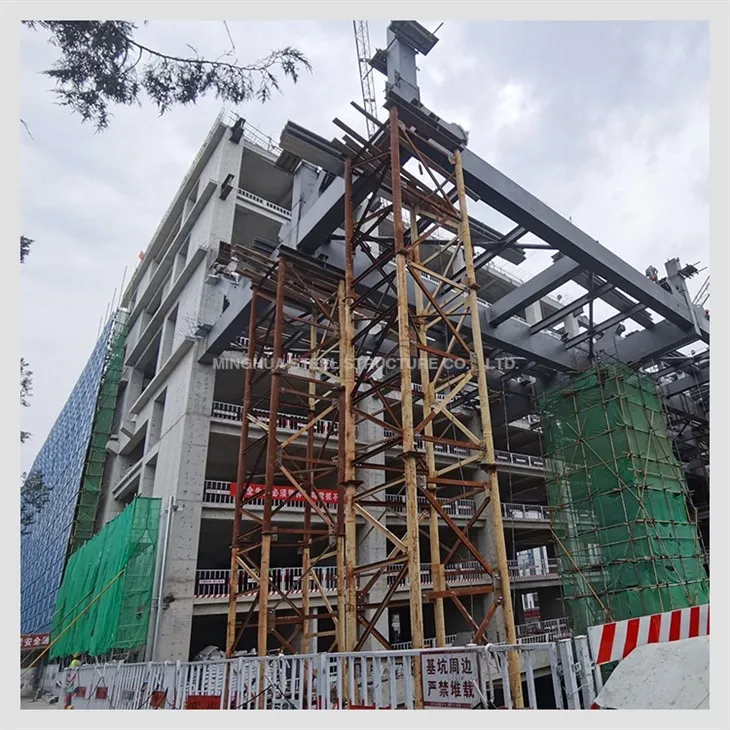

These walls act like a giant brace for the building, preventing it from swaying too much during a storm or an earthquake. In residential buildings, shear walls can be integrated into the building's layout, often serving as partitions between rooms. In commercial buildings, they can be located along the perimeter or in the core of the building.
Moment - Resisting Frames
Moment - resisting frames are designed to resist both vertical and lateral loads. In a moment - resisting frame, the connections between the beams and columns are designed to transfer moments (rotational forces) as well as shear and axial forces.
This type of structural system provides good resistance to earthquakes and high winds. The design of moment - resisting frames requires careful consideration of the stiffness and strength of the members and the connections. It's a more complex system compared to some of the others, but it can offer better performance in challenging environments.
So, there you have it - some of the most common structural systems in multistory buildings. Each system has its own pros and cons, and the right choice depends on a variety of factors, including the location of the building, the budget, the architectural design, and the intended use.
If you're in the market for a multistory building and need help deciding which structural system is best for your project, don't hesitate to reach out. I'm here to assist you with all your building needs, from design to construction. Let's have a chat and find the perfect solution for you!
References
- "Building Construction Handbook" by Edward Allen and Joseph Iano
- "Structural Analysis" by R.C. Hibbeler
- "Design of Steel Structures" by S.K. Duggal